How to Write a Play in a Night, Again

It’s been one year since I wrote a short script for the Stage North Groundlings’ first annual Ready, Set, Play! event. With another turn around the sun, I am happy to say that I once again had the honor to do the same for this year’s sophomore outing.

I wrote about that first experience here. Similarly, I decided to write about my process again for this year. Attached at the end of this essay will be my full script. If you are unfamiliar with the piece, I recommend you read it first then come back to read the rest of this article if you’re curious to see how the sausage was made.

Just the same as last year, I was asked to draw three prompts out of a hat: a “who,” “what,” and “where” that mandatorily be included in the script. They were, in order:

  • Bill Murray
  • A pair of snowshoes
  • The Olive Garden

Contrasted from last year’s event, at this year’s Ready, Set, Play! directors were invited up on stage the Friday night-of, and they were the ones who then drew for actors. After casts had been drawn, the directors next randomly selected for whose script they would be working from. I was assigned a director who had participated last time. He had previously directed the script written by this year’s event’s coordinator.

“Trey, you are in good hands,” the coordinator assured me. I believe he was right. My director, Bill, exhuded confidence from the start. That kind of seasoned drive is what gets things done, and gets things done right. Happy belated Veterans Day, by the way.

Speaking of veterans, I was happy to know that in being partnered with Bill I would also of course be working with his cast, and chief among them in my mind at the time was an old co-star and friend, Laura, who had also played in last year’s event and had absolutely killed it–as I know she does always.

Also among my players was another, teen, actress (Josie) that had performed last year and whom I had worked with previously in the Stage North Groundlings’ production of The Nerd. She had a smaller, character role in that one, but I knew she took the work seriously so I was excited to have her as part of my team as well.

Then, there was an older actress, Allison, who had performed for Ready, Set, Play in a nominal “novice” performance. On an instinct, just to get a sense of things, I quickly asked her if she was ready for a larger role. She said that she was. Wonderful, wonderful.

Filling out the cast was a man of middle age, Matt. He was new to the theater, but had no problems with crowds or public speaking because of his work as a teacher. I asked him if that would mean he would prefer not to have a more “verbose” role. He said that was correct. Absolutely no problem. He had also recently burned his hand and didn’t know if it would be in working condition by the time they would go in about 24 hours’ time. This was a constraint I may have had to consider in crafting his character. Fine, no worries–I love a good challenge.

Bill the director also offered to play a bit part if need be, and after all that was out of the way the group next went on to discuss our cast’s other talents. The usual things came up (juggling, singing, all that sort of stuff), but this time around I was stuck particularly on accent ability. The discussion wasn’t as animated as it had been last time, but Allison, the older actress, mentioned her “New York” accent, and Matt readily exclaimed “bene!” at the mere mention of Italian. Laura, my old co-star and friend, stayed humble for this part of the talk, but I knew she had a few good voices, mainly varieties of British, at her disposal.

I had also asked about what kind of play it was that people wanted to be in. Bill, as an aside to some other topic later on, mentioned “hopefully it’s a comedy.” I felt the same.

Breaking off from the group, I next assessed the stage. This year’s event was black box; the stage would be bare except for what actors and directors could set themselves. The space was flat, save for a short series of stepped platforms in the upstage right. Something to consider.

I next made myself familiar with Stage North’s available props and costumes. I had by this point established with myself that I wanted to write a piece in a restaurant setting, considering faithfully the Olive Garden prompt. I took note of the available tableware, and while busying myself trying to find diving goggles and a snorkel (I had this image of Matt, as a waiter, diving into an offstage restaurant aquarium to address some sort of scripted fiasco), I came across the leftovers of the Stage North Groundlings’ recent production of Steel Magnolias. Colorful hair curlers, extravagant wigs and the absolute arsenal of beauty products had impressed themselves into mind.

Before I left Stage North for the night, I checked in with those of my team that had remained on site by the point. I asked about snowshoes. Perhaps the play was set in winter. Perhaps Matt’s character, addressing an outside emergency, would need a pair. Perhaps, perhaps, perhaps.

From here on out, this story becomes a little bit about what this script didn’t turn out to be or, more precisely, how some of my original visions and ideas didn’t quite come to fruition. Restaurant settings can be tough, you see. As a principle, it’s important to keep your audiences as engaged as possible with your script. Lots of movement can help with that. If I was committed to it all taking place in a restaurant, then I would have to make up for the limited motion.

What quickly came to mind was that my three actresses would play a trio of obnoxious women. If they wouldn’t be moving so much, at least they could try to keep the audience laughing. I had considered things like a “server-beckoning bell brought from home” and a plot line featuring the abuse of the Never-Ending Breadsticks promotion at Olive Garden. I had this idea that the three women were blood-sisters, a striking image given the generational disparities between them each in age. I knew also that while at this restaurant, I would want at least one of these sisters to be making constant guesses as to a fellow patron’s (unseen to the audience) celebrity identity. This offstage character may or may not turn out to be Bill Murray. By this time in the night I had not yet decided.

Before committing to any serious writing, I first met with my friend Jon to brainstorm further. Jon’s a fellow creative with time spent in Hollywood. Providing him with what I had thus far come up with, he had given me some old Bill Murray legends to maybe work in as material. We also noted the more feasible Bill Murrary celebrity lookalikes. 

When discussing the characters and their overall relationship to each other, Jon suggested a “server revenge” story (in one image, Matt was throwing breadsticks back at the women). It made sense, of course: as another principle, it’s good to have somebody the audience wants to root for and gets to see win. That’s what I was setting myself up for if I were to pursue the obnoxious sisters angle, anyway. But it wasn’t sitting right for me. The waiter just wasn’t going to be one of the stronger characters–I wasn’t ready to do that to my least experienced performer.

I next met with my friend Sam, also a creative personality. He and I share a lot of tastes and sensibilities, so it was with him when I really got into the meat of the thing. It was by this point that a title had formed in my head, the lyrical and amusingly prolix The Sisters Rutherford’s Second Annual Memorial Dinner to their Father. I had asked out loud to Sam questions like: what is the conflict? What are the sources of conflict between the characters? I had thought that perhaps one of the sisters had gone away from home, coming back so changed a person that it caused a rift between the siblings. I also considered the personalities of my own three step-sisters, trying to find inspiration in how they contrast and complement each other.

Merely as a means to fill out the script with more jokes, I decided that the sisters would be gathering in memory of their mother and had changed the title thusly. Given the extreme differences of age between the actresses, I thought maybe conjuring the image of an impressively geriatric pregnancy for the audience would be something to keep their interest.

Sam has also had years of experience as a server, and we exchanged a few mishap scenarios that could occur to keep the pace going for the script. This got me thinking of a sketch that I’ve long had gestating in my thoughts: Small Town Fancy Restaurant. Quite a bit of the frame of The Sisters Rutherford’s is based on that of Restaurant, but just enough is left to the original where should I ever come to have it produced I wouldn’t feel like I’m repeating myself. Something for you to look forward to, dear reader.

There was still the issue of what the play was about. It’s very important to me that my work feature some sort of lesson or moral that audiences can take home with them. I want to enrich people’s lives, not make them feel as though their time has been wasted. This is one of my chief creative principles, and coming to recognize this for myself yet again pushed me even further away from the farce of the three obnoxious sisters. I just couldn’t find its soul.

Also to consider still was the concept of medium optimality, imparted to me from the influence of Watchmen. What I was writing was a play–what qualities  are unique to plays that I could exaggerate or touch upon to make this as specific of an experience as possible, one nigh uninterpretable to any other art form? From there came the discussions with Sam about a meta plot line.

That stuck. One way to rouse up interest out of the audience would be to lull them into this false sense of understanding of the reality of the play-world, only to disrupt that with varying degrees of fourth-wall breaking. A line about the Israel-Palestine conflict that made its way into the final script (inspired by a remark from Sam) is my favorite example of this. One sister asks the other if she “wants to ruin everyone’s night” by bringing up the subject. Textually, it makes sense that the sister is considered for the sensibilities of the other restaurant-goers. Sub- and metatextually, it would refer to the discomfort of the audience as they would hear this very real, very uncomfortable, topic brought up at their lovely outing to the theater. No one is safe.

This was a lot to work with. Having all of this material, but still without much of a story or lesson to learn, I set off for home where I would commit something to type. There would be no further discovery in brainstorming; what the piece would come to be now could only be found in writing it. 

And so I did. From one simple set up, The Sisters Rutherford’s Second Annual Memorial Dinner to their Mother poured out of me from around 11 pm through to 4 am the next morning–with promises made to myself that I would come back to it after the first draft to punch it up with some humor. I couldn’t do it, unfortunately. This year I was just too damn tired.

I’ve been exhausted lately. Tested, even. There have been health issues. Relationship woes. Creative opportunities stalling, and others coming up and filling out my schedule, distracting me from passion projects and labors of love. The only constant throughout it all has been change.

Change. What can be changed, what can’t be changed. It seemed to be a fitting subject for a family-centered story. How do we handle change, or the refusal of others to take it on themselves? Addressing these questions was what ultimately became central to The Sisters Rutherford’s. I can’t say with any certainty if I put together anything novel or astute on the matter. That’s ultimately not for me to decide. Maybe this story could serve then as just a simple reminder: to accept life at whatever pace it greets you at. To take on change or lack thereof happily, perhaps even gratefully.

One type of change is the break-up of tradition. I was instructed, same as last year, to include overt references to my prompts in my script. I’ve written a lot today about principles, conventions. Art, at its most daring, has oftentimes defied such rules. If done right, it can serve the artist well. 

I think it did here. Without further ado, following the prompts of “Bill Murray,” “a pair of snowshoes,” and “the Olive Garden,” I present to you my original script The Sisters Rutherford’s Second Annual Memorial Dinner to their Mother unedited and in full:

Talk to Me (2022) Review

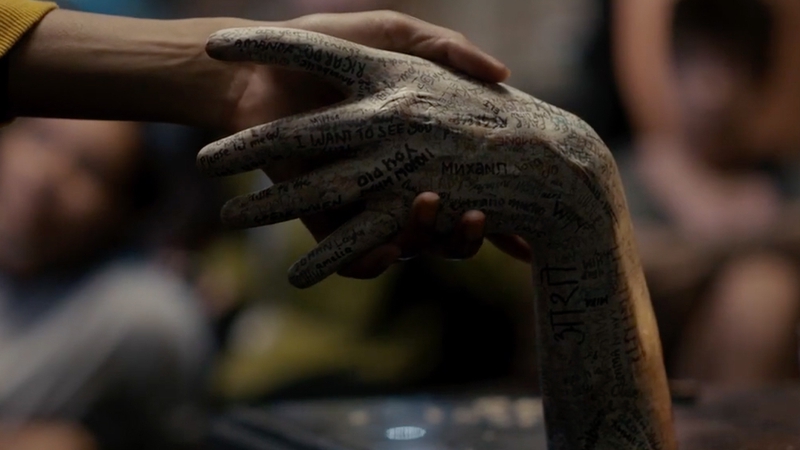
Communication is key in all-star indie studio A24’s newest release Talk to Me, an Australian horror picture that deftly explores themes of teenaged alienation, carelessness, and desperate desires for intimacy.

Mia (Sophia Wilde) is a school kid looking to feel a little alive again in the wake of her mother’s suicide. She and friends Riley (Joe Bird) and Jade (Alexandra Jensen) join up with the other youth around town to take part in the hot new craze: submitting yourself to be temporarily possessed by the dead.

It’s a fun, fresh take on the established teen horror “haunted game” subgenre, delving into topics of peer pressure, drug abuse and the disintegration of empathy within this digital age generation. It never once feels heavy-handed.

The young cast are in full command of this haunting script, penned by co-director Danny Philippou and Bill Hinzman, based on a concept by Daley Pearson. Special kudos to Chris Alosio as Joss, a jocky boy who shepherds newcomers through their possessions. He puffs up a bit of pomp for his parts in the ritual that at first show as adolescent cockiness, but simultaneously read as witch doctor camp in subtext. Striking such balance is worthy of some praise, and credits also to Philippou and co-director/brother Michael for getting this out of him.

Now, as stated, Talk to Me is a fresh concept, and the film knows it too. There’s a lot to be explored here and, perhaps to the film’s detriment, the story takes its time exploring all of those many “what-ifs” of its fledgling mythos. The last third stumbles, sometimes into predictability, disappointing for a film that displayed so much tact and edge in its first act.

Thankfully, it’s just over 90 minutes, so even if the come-down may feel like a bit of a by-the-motions slog, Talk to Me is a quick fix of high horror fun that you’ll want to make sure everyone is getting in on.

How to Write a Play in a Night

This past weekend I had the privilege of working as part of a very exciting community theater project: StageNorth’s inaugural Ready, Set, Play event, a mini festival of eight plays produced in the span of 24 hours. Each play had a different writer, director and cast make-up that would each feature a “who,” “what,” and “where” prompt drawn from a list of community suggestions.

I volunteered myself as a writer immediately pretty soon after the events initial call for talent. I’d like to think I have a talent for it, and I knew this would be a great stretch of my skill. I arrived at StageNorth as required by the event on Friday night. My prompts drawn were as follows:

Who? A podiatrist.

What? The world’s tiniest cuckoo clock.

Where? The old neighborhood.

I had a cast of three actors to work with. Immediately after having drawn the prompts I met with them to discuss what kind of play they would like to be a part of, and what sort of talents they could bring to the project.

I was fortunate enough to have one actress who, in addition to putting on a killer Australian accent, knew how to juggle and perform cartwheels (I found out later that she once worked in a circus), so I knew I had to include these in the script. She also was keen that there be a lesbian subplot.

What the Hell. Why not.

Another of my actors was a young man who came off as fairly shy, but had adorably presented me with a typed up resume of his assets. Among other things he liked to draw, knew how to snap his fingers, and was comfortable performing slapstick comedy.

Given his introversion I was wary to give him too many lines, but knew it was my moral imperative to have him feel as included as possible. Theater is for everyone, after all. So, I made sure to include the aforementioned “louder” of his talents.

I cannot take sole credit for the premise of my piece, nor could I attribute its genesis to anyone of my actors during the brainstorm. It was a true collaborative free-for-all.

After a quick look at what costumes would be available to us, I left StageNorth and my cast for the night, with the intent of returning the next morning at 8 am with a full script, as required by the outline of the event. I made a brief prop run to Wal-Mart for those things that were already taking shape in my mind, and at about 9 pm I settled in for the night and got to typing.

I would close my computer, after having shared a PDF to the tech director for printing, about 5 minutes before 2 am.

It was decided early on in the process that the play would take place in a podiatrist’s office, newly opened in the old neighborhood. Examining rooms are fairly static environments, so it was necessary to me that there be enough zany energy motivating the characters to get them moving.

Another challenge was one typical of any fiction writing: how will the plot complement the story and vice-versa? In other words: how was I going to tie this all up in a neat little bow?

In the end, I decided my play was a love story. It is about a hopeless romantic who, through honest efforts and negligent mishaps, comes to learn something about the nature of heartache.

After about five hours of sleep, I returned to Stage North Saturday morning and handed off That Pain Down Under to my cast and the newly drawn director. I left in their hands. They performed the piece about 24 hours after I first came to the playhouse the night previous. It was the final play of the night, a scheduling choice that the event producer told me was “for good reason.” I was humbled beyond belief.

For those of you that couldn’t make it, here is my original script, unedited and in full. Thanks.

Making a Better Movie with Multiverse of Madness

Are you familiar with multiverse theory?

It’s the idea that outside the bounds of our own universe there exists an infinite number of alternate worlds. Every event, every decision, every point in the course of genetics, evolution, and our own behavior is manipulated to their last possible permutations.

Out there in the multiverse is a reality where Hitler won the war, where I ate better as a kid and now live as a strapping 6’2″–

–and there would even be a world where Doctor Strange in the Multiverse of Madness didn’t make all the many mistakes that it did.

I try not to write too much on Marvel movies (save for here, here, here, here and here). With 25+ of MCU films behind us, an ever-expanding number of “new” stories falling into an almost Aristotelian state of formula, it just gets harder and harder to say anything unique about these films.

But when Sam Raimi was announced to direct this sequel to the eponymous 2016 film, I got excited–now there’s a unique filmmaker. I’m talking the snap zooms, the Dutch angles, the sweet practicals, and the balls necessary to put this scene into certifiable children’s movie Spider-Man 2.

Nearly everything that Sam Raimi touches in this film flares with his distinct vision. His coordination with cinematographer John Mathieson brings about all the aforementioned technical trademarks and a few others here left unsaid to give viewers what very well may be the most visually bold MCU movie released yet–and that’s consistent through it’s reasonable 126-minute runtime.

There is a lot to like about Multiverse. The costumes are great, the sets are fun, and Danny Elfman’s score is just one of the zaniest compositions ever put together, sounding off almost like a with-rock punchline to what we see on the screen.

Unfortunately, none of these things can compensate for the film’s awful, worst-reality script. It’s expository, poorly plotted, riddled with plot devices, and the dialogue is placeholder. But worst of all is that the story is just downright uncompelling.

It didn’t have to be this way. Had a few key decisions been thought through, I’m sure Multiverse’s screenplay could have been just as strong as its other elements. I want to take a moment and identify what I believe to be the film’s shortcomings, and what I would have liked to have been done differently.

Let’s get into it. Obvious spoilers ahead:

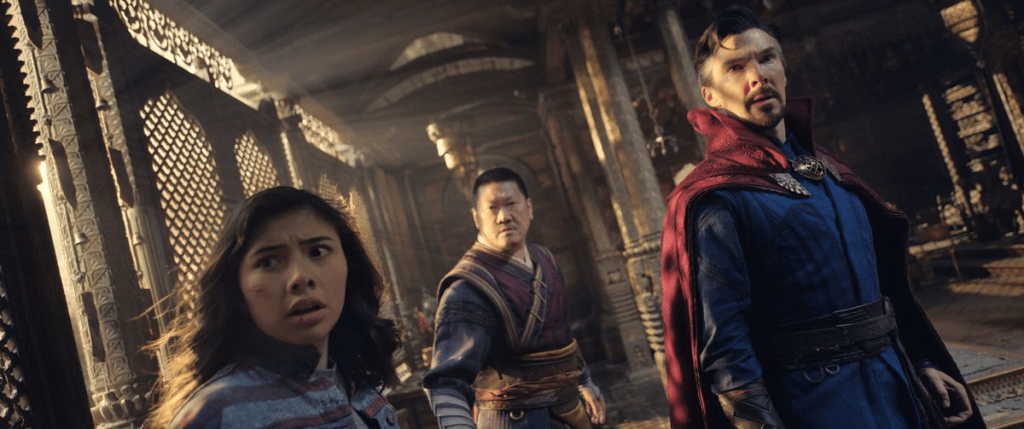
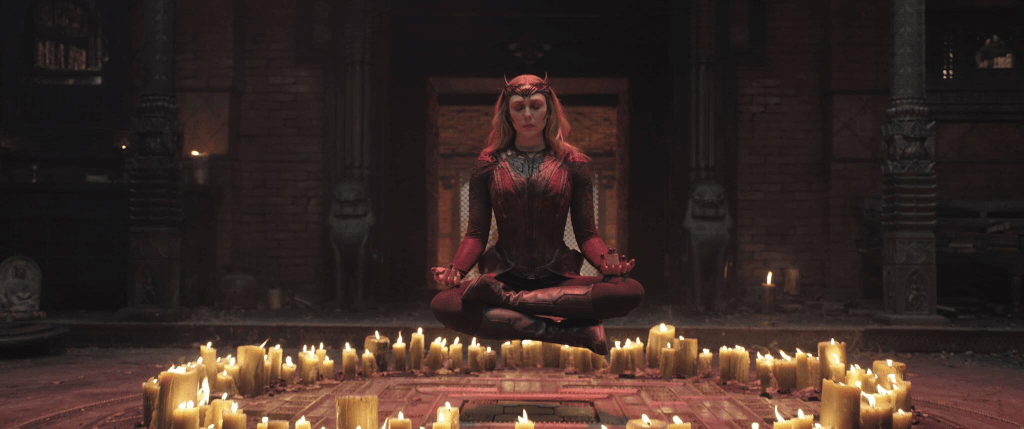
Doctor Strange in the Multiverse of Madness follows the super-sorcerer Stephen Strange (Benedict Cumberbatch) on his journey to save young America Chavez (Xochitl Gomez) from the clutches of the turned Wanda Maximoff (Elizabeth Olsen). America possesses the ability to travel between the worlds of the multiverse, a power that Wanda seeks in order to grant herself a life with children. Strange and America flee to an alternate Earth protected by a group of heroes known as The Illuminati, whose ranks include fan-favorite characters like Reed Richards (John Krasinski) and Professor X (reprised by Patrick Stewart).

The film opens in chase. America and an alternate version of Strange flee from the minions of some yet-unknown villain. With defeat imminent, this doppel-Strange performs a ritual spell that would kill America, but keep her power out of the hands of evil. This Strange dies before he can finish the job, and America flees to the universe of the familiar MCU Strange.

With much the same break-neck pace that the film fades in on, so too does the relationship between America and our hero Strange. Young Chavez displays the usual, trope-ish distrust–is this Strange, are all Stranges, just the same? But any sort of conflict in their relationship is resolved by the end of the first act. Chavez has nowhere to go (or grow) for more than an hour after that; she is reduced to a talking MacGuffin.

Suspecting that magic is at play in the plot against America, Strange turns to his fellow Avenger and magic-wielder Wanda Maximoff for help but, in yet another lightning-speed leap of the story, Wanda lets slip that she is the one after Chavez. There’s no time for the twist to build, nothing to enjoy since it hasn’t really settled in.

There is a very poor sense of stake at work here. This movie is dealing with an entire multiverse. That’s a very grand thing, something that speaks to the fate and nature of existence itself. But our driving conflict to this story is a very intimate, very personal thing for one character. It’s incongruous with the larger concept, and in the end feels unengaging.

Screenwriter Michael Waldron also fails to make Multiverse the smartest script it possibly could be in one key aspect: Wanda possesses an ancient tome of evil magic known as the Darkhold. This spell book allows Wanda to possess alternate versions of herself across the universe. The big question being: if she could do this the whole time, why not do that in the first place? Why go to the trouble of tracking down America?

The film certainly never makes it seem like Wanda is aware or even cares about the consequences of abusing this magic, known as “dream walking.” In the ultimate doomsday reveal, wanton use of the Darkhold can lead to events known as “incursions”: the collisions of entire universes against each other.

Now those are stakes. If there was anything I wish this movie spent rushing its first hour into it, it would be that–just so that maybe it could spend the second half developing its characters a little bit more.

Character is a major problem in Multiverse. Wrapping up all the thoughts on Wanda that I have, I’ll just punctuate it with this: she just simply is not a well-paired villain for Strange.

The best villains are those with personal connections to our heroes. They can either be once dear friends or mentors, or paralleled personalities whose motivations are some mirrored inversion of the good guy’s. One need only look back on director Raimi’s Spider-Man trilogy for the exemplars.

Yes, Wanda was once Strange’s teammate, but I don’t think they ever once said a word to each other before the events of this film. There just isn’t enough for this dynamic to really hurt.

Stephen’s former mystical art ally Karl Mordo (Chiwetel Ejiofor) returns for the sequel, though it’s not the Mordo we once knew–and who was guaranteed to be a villain for next time. No, instead the 2016 film’s cliffhanger ending is swept under the rug, even though the old Mordo’s villainous turn works perfectly with Strange’s scantily-addressed character arc.

Doctor Strange displays hubris. He was always pushing buttons and breaking rules in his first film, and it was his risky decision of handing over the Time Stone to Thanos that eventually lead to the Blip, upending the lives of trillions across the universe–all to stop one, single warlord.

Hell, for these reasons Michael Stuhlbarg’s bit character Nicodermus West would have made for a better villain than Wanda–but his grief and grudge against Strange gets only two minutes on screen. It could have carried the entire film.

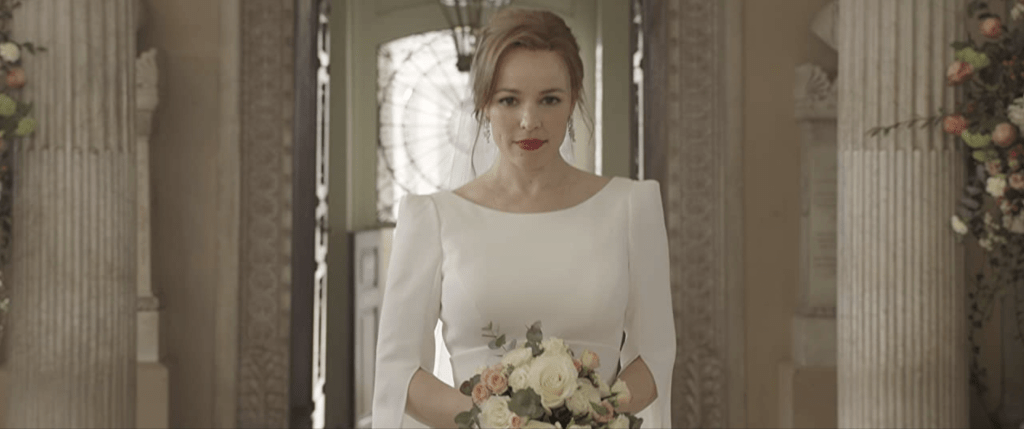
But worst of all for Multiverse is that our hero simply doesn’t change. Good stories involve transformation. They are about moral teachings imparted onto the characters along their journeys. They learn, and the audience learns with them. But Stephen begins this movie with a chip on his shoulder, failing to reconcile his guilt over his role in the Blip, and burgeoningly accepting his life away from love interest Christine Palmer (Rachel McAdams).

How does it end? With a life away from Christine, burgeoningly accepted, and with absolutely no deeper introspection into his great, genocidal gambit. We are right back where we started, and we are not the better for it (in spite of a sly smile and a wicked third eye at the end).

So, what would I have done differently? For starters, something has got to be done with America. Either really milk that wariness of Strange well into the second or even third act, or scrap her entirely. I’m in favor of the former for most reasons, but if we really must keep Wanda on as the villain, then expediting the Darkhold-incursion plotline really does just render Chavez’ character as pointless.

Raising the stakes sooner likely would have gotten us to the Illuminati quicker as well. It would have been nice to have seen a bit more of these characters, especially since them being so under-written means that they’re also a little under-acted in this film. I do appreciate how much build-up and anticipation was put into their appearance, though, only for it all to be snubbed by their gruesome demise. It’s a darkly comic effect, but I also wouldn’t have minded their deaths having more dramatic impact. It works both ways.

But God, something has got to be done about Stephen. Make me care, give me turmoil, show me something other than the most thread-thin motivations. If we have to do the unrequited love thing, then make it big.

I can’t help but think back on Strange’s scene with West in the church pews. Regarding his handing over the Time Stone to Thanos, West asks if there really was no other option. Strange pauses, before answering that it was the only way. My thought being…

What if it wasn’t?

What if actually there had been two possible futures wherein Thanos was defeated? One would be the one that we’ve already seen, and the other very well would like much like it–accept that somehow this one would result in Christine’s Palmer’s unstoppable, unavoidable death?

Now that’s good character.

Look, Doctor Strange in the Multiverse of Madness is highly enjoyable. I loved a lot of what I saw–but we as audiences should never settle for “just good enough.” We are talking about films with the biggest mass appeal in history. They shape entire cultures. It is our responsibility to demand better, to have art that is both edifying and entertaining.

We have to strive for more. We don’t have another, better world to count on. Thanks for reading.

Word Salad on PTA, Licorice Pizza, and Secretly Unhappy Endings

The three main stars of Licorice Pizza: Cooper Hoffman, Alana Haim, and running. Lots of running.

Last week I went to the theater and saw Licorice Pizza with some friends. After our viewing we all gathered in the lobby, where we caught up on our personal lives and bantered about the film.

One friend asked me:

“So, what do you think the title meant?”

Continue reading “Word Salad on PTA, Licorice Pizza, and Secretly Unhappy Endings”

The Green Knight: An old tale, retold for modern times

Early in their studies, fledgling archaeologists are often confronted by this classic dilemma: in a world of finite resources and where time’s arrow only marches forward, what use is there in preserving the past?

Answers to the quandary vary, but the most common would be something like this: to learn more about who we are presently, and who we may very well become. In this similar vein, A24’sThe Green Knight resurfaces an artifact of yore, appropriating its characters and devices for moral lessons more relevant to today. It’s an overall satisfying reimagining, rife with apt performances and impressive production, though it can at times fall victim to the “arthouse powerhouse” studio’s worst instincts.

Continue reading “The Green Knight: An old tale, retold for modern times”

Living Free Under Fascism: The Existential Nightmare of The Conformist

Born in Northern Italy in 1941, it would not be unfair to say that Bernardo Bertolucci’s first-hand experiences with fascism were likely indistinct and inoffensive to his young mind. Mussolini’s regime had fallen when Bernardo was only two, and the future director had only just turned four when the Salò Republic puppet state had finally disintegrated in 1945.

Raised in what he described as a “Marxist context” by intellectual parents in the city of Parma, the young Bernardo came of age during the fledgling days of the First Italian Republic. Though there would be echoes of nationalist extremism, the more apparent political crises of this time (and thus, far more impressionable upon Bertolucci) would have been the severe disparities in wealth between any and all sorts of Italian communities during the so-called “Economic Miracle.”

Given all of this, it is no wonder that Bertolucci admits that his 1970 classic The Conformist, in spite of its fascist setting and aesthetic, is first and foremost a film about the middle-class. It is a gorgeous and oftentimes hilarious critique on the self-preserving but ultimately unfulfilling nature of the affluent, rife with striking visual metaphors (our protagonist at one point, while practicing his aim, mindlessly points a pistol to his head, only to ask: “where is my hat?”). 

Continue reading “Living Free Under Fascism: The Existential Nightmare of The Conformist”

Minari: as American as agwi-jjim

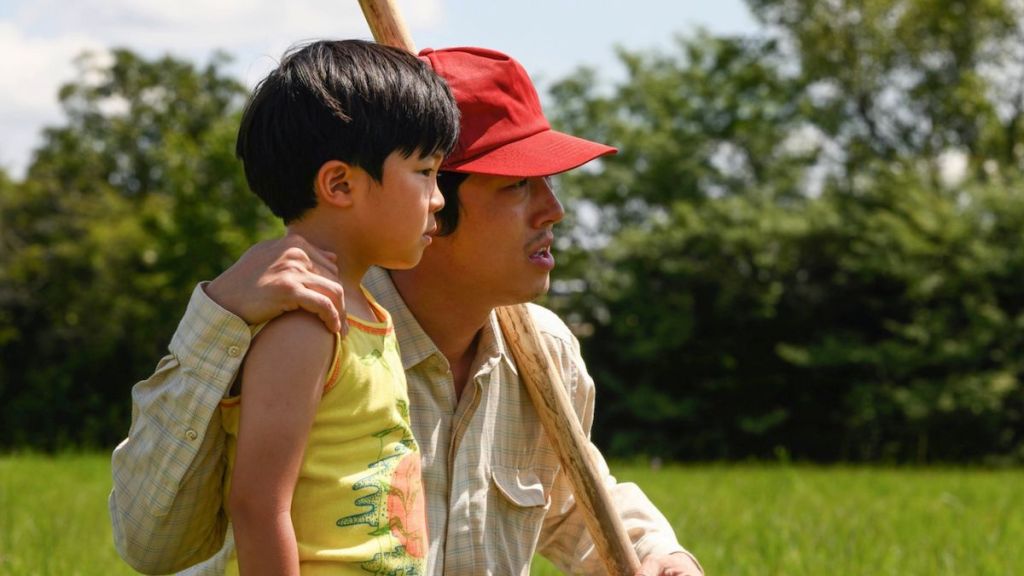
There’s an old saying on the nature of stories: at their best, they should simultaneously be as old tales told as new, and new ones defined as classics. Writer-director Lee Isaac Chung’s Minari is an exemplar of the adage, recontextualizing the age-old American Dream for an underrepresented subject. The film is a thoughtful work of art, and is necessary viewing for a full understanding of what some claim to be the greatest nation on Earth. Spoilers below:

Jacob (Steven Yeun) prospects for water with his son David (Alan Kim). Photo: A24
Continue reading “Minari: as American as agwi-jjim”

30 Years of Silence: a retrospective on struggle, lessering, and objectification

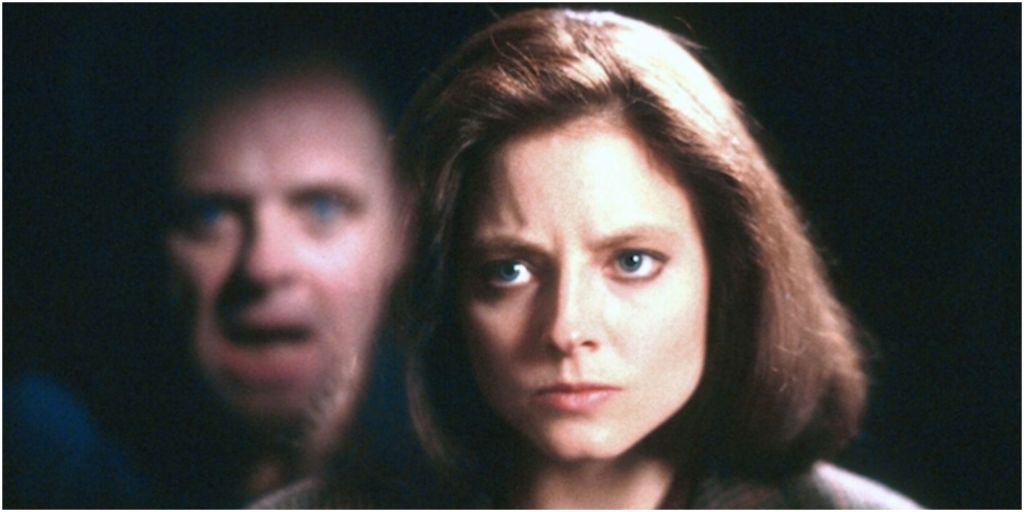
Clarice Starling (Jodie Foster) interviews Hannibal Lecter (Anthony Hopkins). The performances will likely be remembered as the greatest in both of their careers. Photo: Orion Pictures / Metro-Goldwyn-Mayer

I was a very young boy when I first saw The Silence of the Lambs. Not the movie itself, but rather its cover.

Continue reading “30 Years of Silence: a retrospective on struggle, lessering, and objectification”